
Thermal Imaging for Solar Farms, PV Assets & Industrial Installations
Protecting your yield on large-scale solar assets requires finding electrical faults before they cause downtime, safety hazards, or significant energy loss. Thermascan provides expert drone, aerial, and ground-level thermography for solar farms and industrial PV portfolios.
Our radiometric surveys detect hot modules, string faults, and DC connection issues instantly, giving your operations and maintenance teams the exact data they need to act.
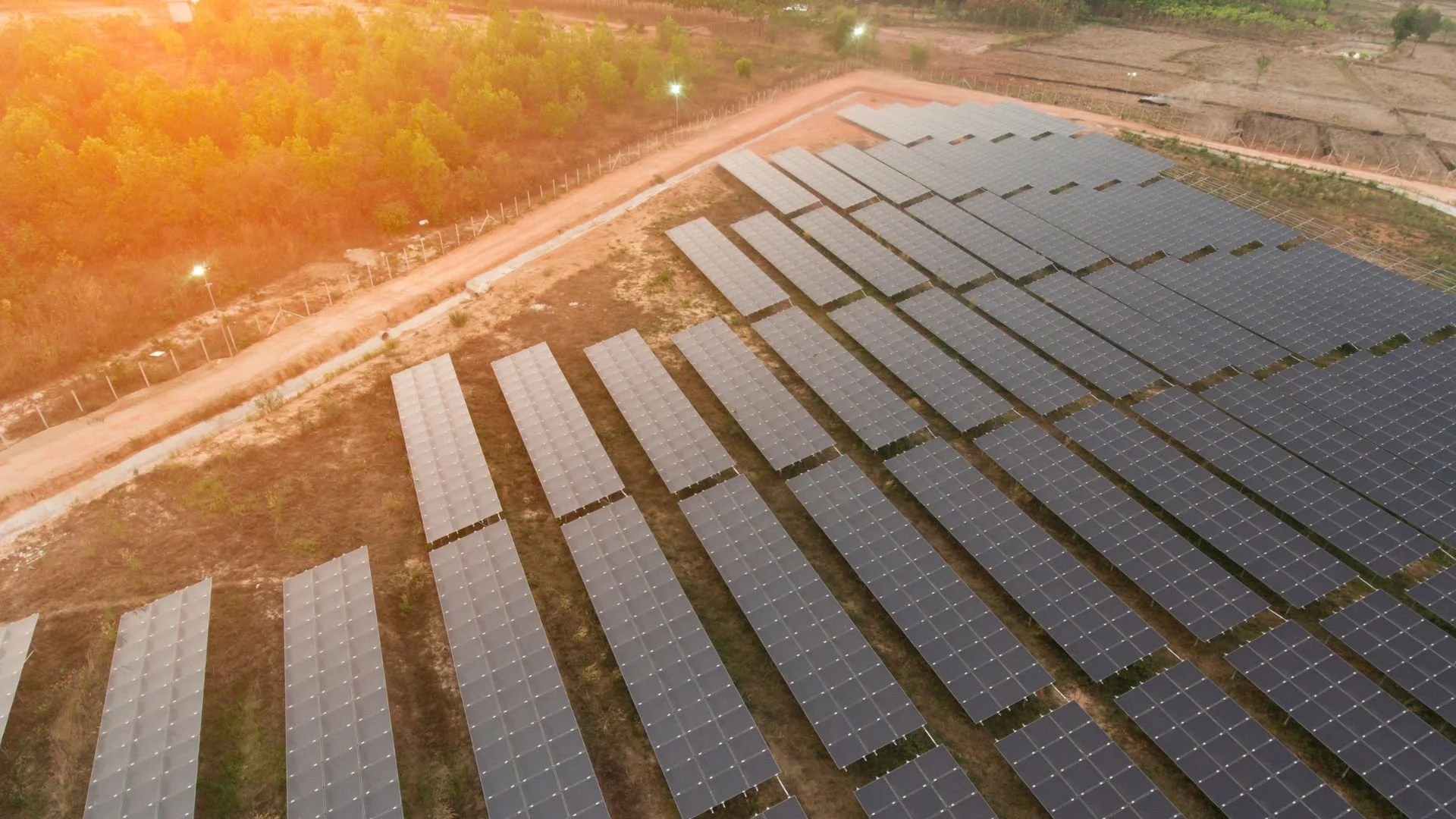
Why thermography is critical for solar asset management
Photovoltaic panels and their surrounding electrical infrastructure degrade naturally over time. Cell cracks, delamination, and faulty terminations rarely show visible signs of failure, but they generate distinct thermal anomalies under electrical load.
Infrared surveys detect these temperature variations while the system remains fully operational. Because thermal imaging is non-destructive and non-intrusive, large sites can be inspected rapidly without requiring system shutdowns, ensuring zero disruption to your daily energy generation.
Precise fault detection across PV systems
Thermascan’s Level 2 certified thermographers analyse thermal patterns to identify specific failure modes across your arrays. Recognising these distinct thermal signatures allows asset managers to pinpoint exact component failures.
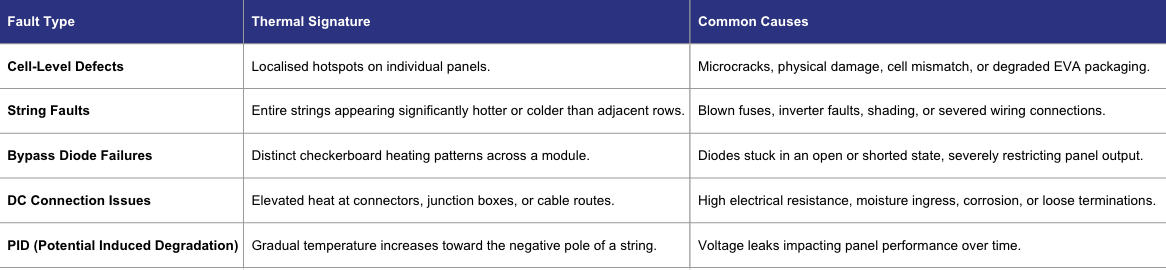
By mapping these specific findings to exact geolocation coordinates, we provide your engineers with a highly accurate work pack for targeted repairs.
Need to identify faults on your site? Contact Thermascan to arrange a site assessment.
Drone and aerial thermography for utility-scale sites
Utility-scale solar farms and expansive commercial rooftops require an inspection method that balances speed with absolute precision,
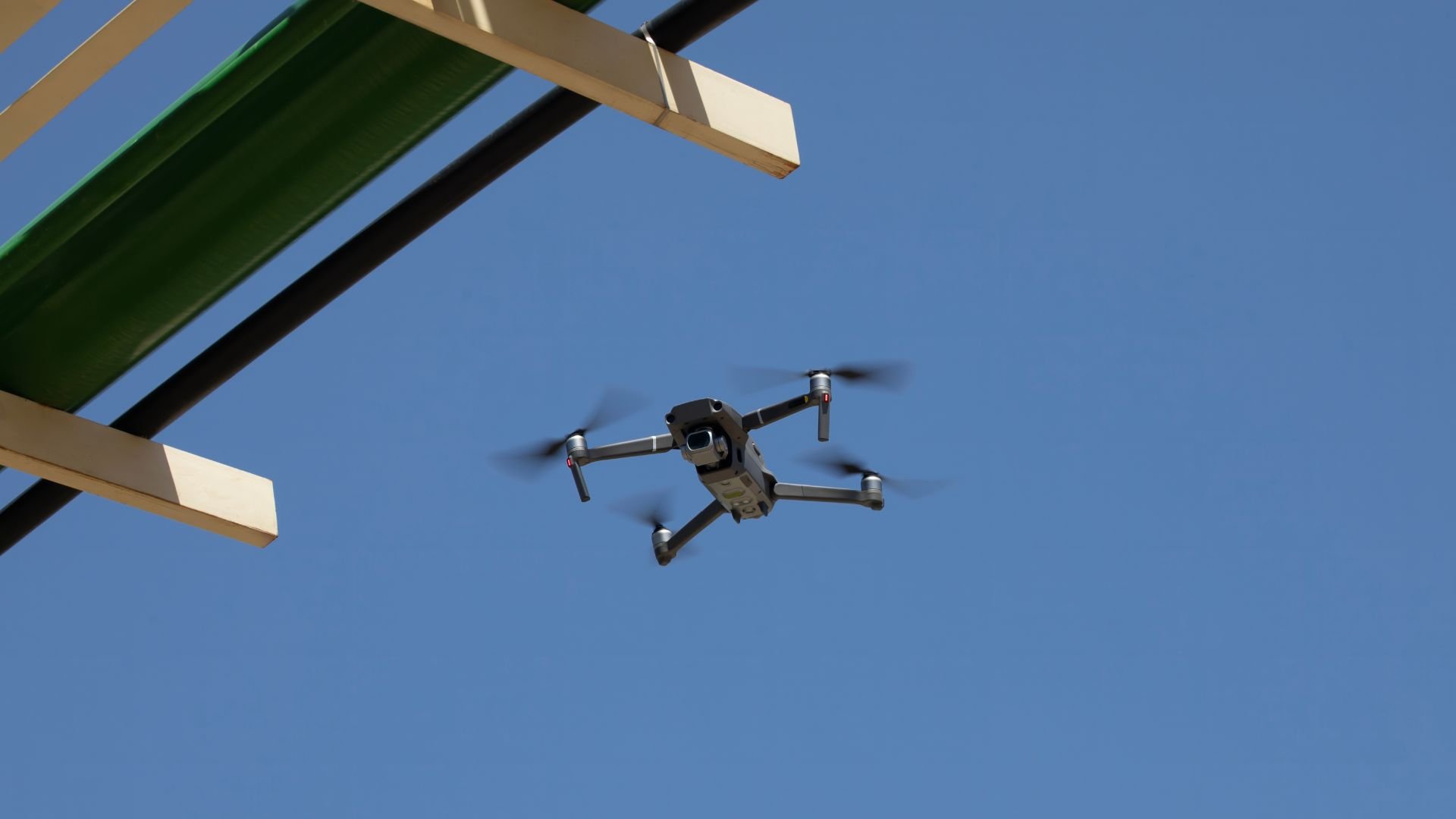
Thermascan utilises heavy-lift drones equipped with high-resolution radiometric thermal cameras to survey thousands of modules in a single flight.
Aerial thermography offers distinct advantages for large sites:
Rapid coverage: Scans megawatts of capacity in a fraction of the time manual testing requires.
Safe access: Inspects fragile, steep or hazardous industrial roof spaces without scaffolding, edge protection, or working at height risks.
Georeferenced data: Produces accurate thermal orthomosaics that overlay directly onto your site schematics.
To ensure comprehensive diagnostics, we pair aerial data with ground-level thermal assessments. This covers the critical AC-side infrastructure, including inverters, combiner boxes, and MV/LV switchgear, which drones cannot always view clearly.
IEC 62446-3 compliance and reporting
Insurers, warranty providers, and portfolio investors demand rigorous, standardised inspection data. Thermascan structures all solar inspections to comply with IEC 62446-3 guidelines for photovoltaic system thermography.
Our structured reporting provides undeniable proof of asset condition, featuring:
Fully radiometric thermal imagery paired with visual-light references.
Exact fault locations annotated on site maps.
Severity classifications to help O&M teams prioritise remedial work.
Maintenance recommendations aligned with current industry best practices.
This documentation is heavily utilised by asset managers for warranty claims with panel manufacturers, satisfying annual insurance requirements, and conducting technical due diligence during portfolio acquisitions.
Maximising ROI and protecting yield
Every high-resistance connection or underperforming module actively drains the energy your installation produces. On a multi-megawatt site, even a 2% efficiency drop results in substantial annual financial loss.
Integrating thermal surveys into your planned preventative maintenance schedule allows you to:
Direct maintenance budgets precisely where they will recover the most generated power.
Prevent minor electrical resistance faults from escalating into critical fire risks.
Build a clear, auditable history of asset health for stakeholders.
Schedule your thermal solar survey
If you manage PV portfolios, industrial rooftop arrays, or utility-scale solar farms, accurate thermal data is the fastest route to protecting your yield.
Contact our team today to discuss your site layout, capacity, and reporting requirements. We will design a bespoke inspection plan tailored to your specific asset class and maintenance schedule.
Frequently Asked Questions
-
No. Thermal inspections are strictly conducted while the system is energised and operating under normal load. Faults generate heat through electrical resistance, meaning they produce the clearest thermal contrast when the panels are actively generating power.
-
Accurate radiometric data requires strong, consistent solar irradiance. In the UK, surveys are optimally scheduled on clear days between late spring and early autumn, requiring an irradiance level of at least 600 W/m² and stable weather to prevent cloud cover from skewing module temperatures.
-
Thermal imaging is a complementary technology, not a complete replacement. While it instantly identifies cell-level defects and bypass diode failures that string-level electrical tests often miss, physical electrical testing remains necessary for comprehensive safety compliance.
-
Yes. Thermascan inspects everything from sprawling ground-mounted utility farms to complex commercial and industrial rooftop arrays across the United Kingdom.
