
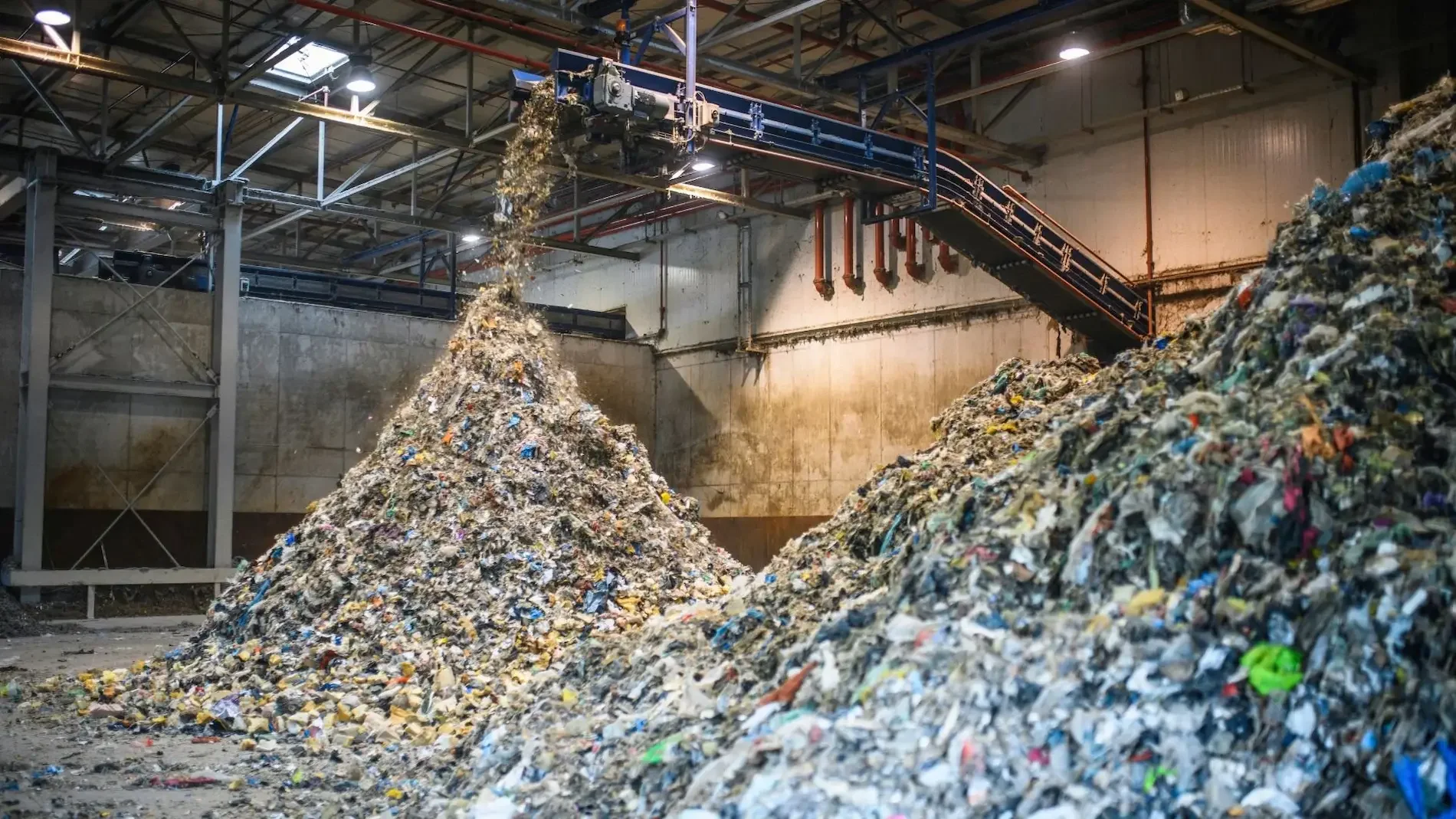
Thermal Monitoring for Battery Waste & Recycling Facilities
The UK recycling sector now handles large volumes of lithium-ion batteries from consumer, automotive, and industrial sources. Damaged or degraded cells can enter receiving, sorting, and shredding lines and go into thermal runaway, driving fastmoving fires through conveyors, stockpiles, and processed batches.
Thermascan uses FLIR fixed cameras to monitor these areas continuously, 24/7. The system detects early thermal stress in battery materials before runaway begins, giving teams time to isolate materials and respond safely.
Operational Impacts of Battery Fires
Material Recovery Facilities (MRFs) and mixed waste plants
Lithium batteries hidden in mixed streams can ignite on conveyors or in sorting lines, causing line shutdowns, stock loss, and damage to sorting/shredding equipment. This leads to supply disruption for downstream processors and costly recovery work.
Ewaste processing facilities
Batteries removed from devices, or left inside products, can go into thermal runaway during disassembly or shredding. This forces staff evacuation, damages specialist separation equipment, and undermines the site’s environmental and safety credentials.
Dedicated battery recyclers
High volumes of cells and modules mean a single failing battery can compromise whole batches. Major events can trigger regulator investigations, licence conditions, and long recovery times while damaged assets and processes are restored.
Scrap, general recycling, and transfer stations
Lithium batteries mixed into metal or general waste can cause unexpected fires in stockpiles, hoppers, or containers. These incidents damage infrastructure and interrupt wider operations running alongside battery handling.
Transport and logistics
Thermal events in transit can damage vehicles or containers, close roads or rail links, and lead to rejected loads at receiving sites, with knock-on insurance and liability issues.
How Thermal Imaging Can Help
Receiving, sorting, and processing
Monitors receiving bays and early sorting lines to spot overheating batteries before they reach highspeed or high-energy equipment.
Watches key processing points (disassembly, shredding, separation) where damaged cells are most likely to enter thermal runaway.
Storage and stockpiles
Tracks temperature in temporary storage and battery stockpiles, helping teams isolate problematic batches before ignition.
Sitewide safety and response
Provides 24/7 coverage independent of shifts and throughput.
Sends targeted alerts with location and thermal images so teams can isolate material and trigger local emergency procedures quickly.
Thermal Runaway Risks
Lithium-ion battery fires in recycling environments are distinct from other industrial fire risks. Batteries arriving at facilities are often damaged, moisture-exposed, or mechanically compromised during collection and transport. When these cells enter processing, sorting conveyors, shredding equipment, or material batches, thermal runaway can initiate rapidly and cascade across adjacent materials. Internal temperature can rise from ambient to over 200°C within minutes once thermal runaway begins.
Why Thermascan?
| Built on Proven FLIR Thermal Imaging Technology | Installed & Commissioned by Thermascan's Own Thermographers | Decades of Field Experience |
|---|---|---|
| FLIR is globally recognised for thermal imaging reliability across critical safety infrastructure. | No external installers; your system is configured by thermography specialists experienced in battery recycling environments, ensuring reliable detection thresholds and seamless integration with your specific facility layout. | Thermascan has delivered thermal monitoring solutions across UK industrial, manufacturing, and waste management sectors for many years, with proven effectiveness in early-warning detection for thermal hazards and staff protection. |
Arrange a Site Assessment
A Thermascan thermographer can visit your facility to:
Review your material processing flow, equipment layout, and thermal risk points
Recommend camera positioning for maximum coverage of receiving, processing, and storage areas
Assess integration with your facility alarm systems and emergency protocols
Discuss temperature thresholds appropriate to your battery input types and processing methods
Contact us to book your assessment or request more information.
Find out more about Fire Detection
Fire Detection for Businesses
Detect fire risks early with precision thermal imaging solutions
FAQs
-
Lithium batteries in recycling are often damaged or wet, which can trigger thermal runaway during sorting or shredding. This rapid heat build-up can spread through material piles and is hard to control once it starts.
-
Early thermal detection spots rising battery temperatures before ignition, so teams can isolate material and move staff safely. This avoids jumping straight to full emergency fire response when a fire is already established.
-
Yes. Thermal monitoring can watch receiving areas and early sorting lines to pick up batteries that are already overheating. These can then be quarantined before they reach main processing equipment.
-
No. Thermal monitoring complements visual checks and testing. It adds continuous oversight during handling, conveying, and storage, catching issues that inspections at intake alone might miss.
-
The system sends alerts as soon as battery temperature exceeds a set threshold. Each alert includes a thermal image with the hotspot location and temperature so teams can act immediately.
-
Yes. Multiple fixed cameras can cover receiving bays, conveyors, sorting points, storage areas, and processing lines. The exact layout is planned during the site assessment.
-
Yes. Cameras are rated for industrial conditions, including dust, vibration, and temperature changes across the facility. They are designed for the demands of high-volume recycling operations.
